Power-grid synchronization modelling
Workshop within the SigmaPhi 2026, Kolymbari, Crete, Greece,
6th of July, 2026

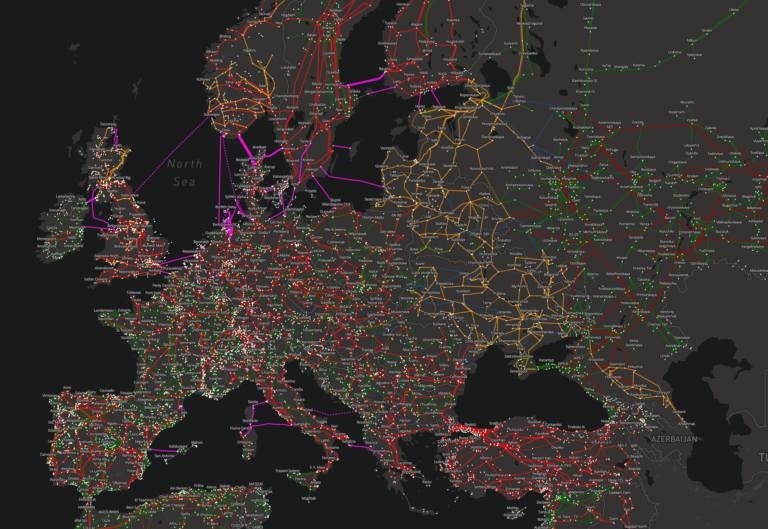
Increasing fluctuations by environmental changes, de-carbonization, rapidly growing energy demand put high pressure on the energy distribution systems. Even small failures can lead to large cascade of outages, like in case of the 2025 great Iberian peninsula blackout. Modeling operation and development of power-grid networks with the tools of statistical physics has been developed fast recently and provided new look on these close to critical systems.
In this workshop we provide the latest developments by the experts of this field embracing complex multi-disciplinary disciplines ranging from network science, physics, engineering to data science.
6 July, 2026
14:00-14:25 Pere Colet:
Transmission Grid Stability with Large Interregional Power Flows
14:25-14:50 Heetae Kim:
Stability of Modular Power Grids under Minimal Structural Interventions
14:50-15:15 Christian Beck:
Understanding the complexity of frequency and phase angle fluctuations in power grids
15:15-15:40 Daniel Campos Moreno:
The effects on power grid synchronization of increasing the level of refinement in distribution networks
15:40 -16:05 Xinyi Wen:
PowerSINDy: Identifying Nonlinear Time-Dependent Dynamics in Power Grid Frequency
16:05 -16:30 Michelle T. Cirunay:
Topological Insights into the Resilience of European High-Voltage Grids: A Cross-Country Comparison
16:30-16:45 Kristof Benedek:
A system divided: Stability and size dependence of segmented power grids
16:45-17:00 Geza Odor:
The effect of HVDC lines in power-grids via Kuramoto modeling
Invited Speakers
Pere Colet:
Transmission Grid Stability with Large Interregional Power Flows
Heetae Kim:
Stability of Modular Power Grids under Minimal Structural Interventions
Christian Beck:
Understanding the complexity of frequency and phase angle fluctuations in power grids
Daniel Campos Moreno:
The effects on power grid synchronization of increasing the level of refinement in distribution networks
Xinyi Wen:
PowerSINDy: Identifying Nonlinear Time-Dependent Dynamics in Power Grid Frequency
Michelle T. Cirunay:
Topological Insights into the Resilience of European High-Voltage Grids: A Cross-Country Comparison
Organisers
Geza Odor